
Projects


21. May 2026
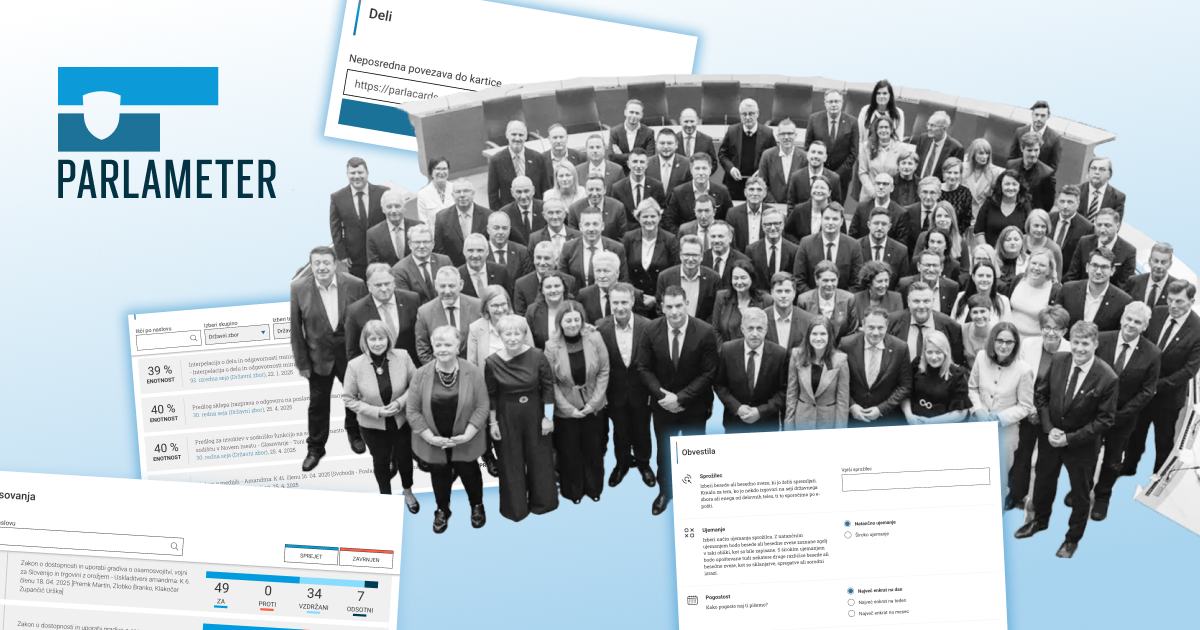
During the election campaign, certain MPs promised power to the people, but now they were the ones blocking the referendum on an emergency law that only served the wealthy. We reminded them who they worked for! A referendum is our right, and enabling it is their duty. That is why we developed a website to help users take action, allowing them to click on an MP and send a clear message: Do not block the referendum!


23. April 2026
As the new coalition slowly took shape, the first policy battles were already being fought in the National Assembly. To ensure you do not miss key developments, we updated Parlameter, allowing users to track the work of the MPs in the 10th assembly. Check out how they vote and what they discuss! This app is in Slovenian.



1. April 2026
On Tuesday, 14 April, Bram Vranken from the Corporate Europe Observatory gave a lecture at the EU House. Attendees learnt how digital policy lobbying works in the EU, who has the most access to decision-makers, and how Big Tech corporations influence the adoption of European rules. This invitation is in Slovenian.
In cooperation with the Alliance for Integrity.



Subscribe to Občasnik, our monthly newsletter
Each month, we curate a selection of our reflections, projects, public appearances, collaborations and recommendations for reading and action. Občasnik is concise yet substantial, effective yet unobtrusive — and always timely!

16. March 2026
On 22 December 2025, two representatives from the Israeli private intelligence firm Black Cube met with SDS President Janez Janša in Ljubljana. Three months later, videos surfaced in Slovenia using methods that Black Cube has employed for years in political and intelligence operations worldwide. Read the full investigative report on potential interference in Slovenian democracy.
In cooperation with 8th of March Institute and Mladina.



10. February 2026
With the upcoming election and the media once again filled with promises, catchy slogans, and glossy posters, it was the perfect time to look beyond the rhetoric and take a closer look at the work of the MPs in the ninth National Assembly. Because we believe people's vote should be based on substance, we have compiled data on the outgoing assembly's performance into a series of in-depth analyses. This content is in Slovenian.
5. December 2025
The Ministry of Digital Transformation recently published new guidelines for the development of IT solutions. We believe the document overlooks key aspects affecting security, the position of users, and service quality. As a result, we propose improvements ranging from stronger rights protection to open source and stakeholder inclusion. Read our comments and recommendations! This text is in Slovenian.
4. July 2025
The proposed amendment to the Prevention of Money Laundering and Terrorist Financing Act limits access to the register of beneficial owners, thereby preventing public scrutiny of financial ties between companies and those in power. This text is in Slovenian
In cooperation with the Alliance for Integrity.
For our continuous independent work we need your support!!
Donate
8. May 2025
Before the 2022 local elections, we once again called on mayoral candidates to commit to introducing a participatory budget. Of the 62 who were elected, 38 kept their promise, while 24 failed to deliver. Check the interactive map to see the status in your municipality and across Slovenia. And for mayors who still refuse to involve the public in decision-making, remind them with our ready-made message. This text is in Slovenian.
15. April 2025
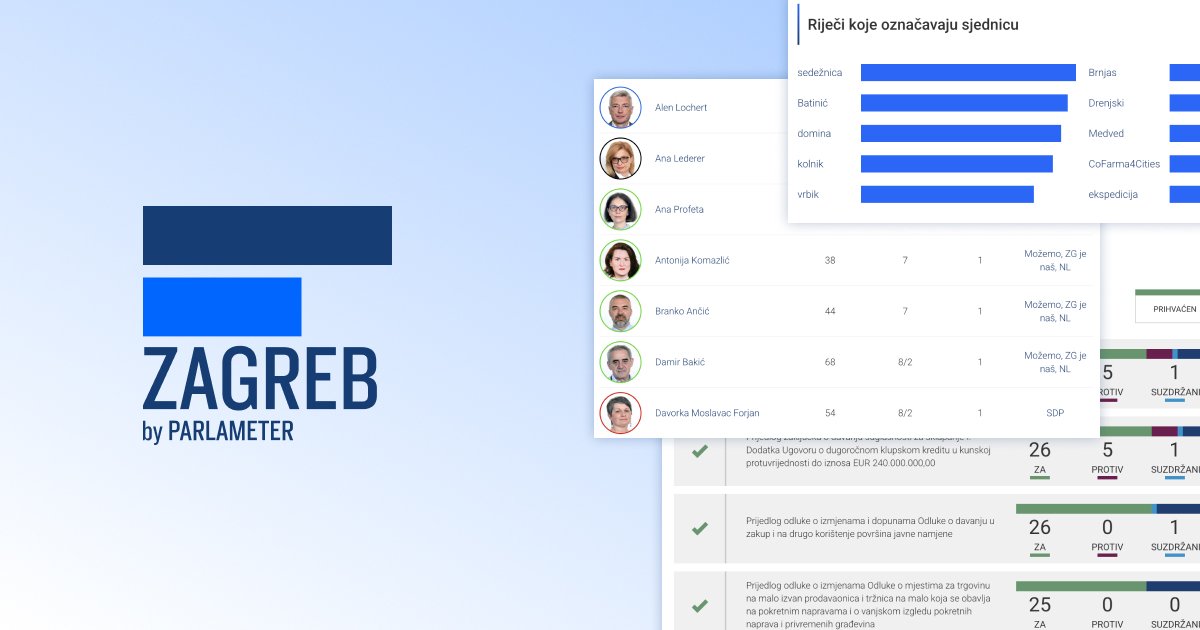
The installation of the local version of Parlameter in Zagreb was carried out with the Croatian organisation Gong and the support of the Zagreb City Assembly. Citizens now have clear and user-friendly access to information about the workings of city politics and key decisions that affect their lives, without the need to sift through countless documents. We are proud to have launched Parlameter for the twelfth time, working with a growing number of local communities who recognise the importance of openness and transparency.
In cooperation with Gong.
24. October 2024
The development and use of artificial intelligence come with significant risks, so it’s crucial to handle it responsibly and transparently, especially when making decisions that affect people's lives. To address this, we developed the Public Sector AI Registry, the first organised database documenting the use of artificial intelligence systems in the Slovenian public sector. We compiled the data through a combination of research into publicly available sources and requests for public information, and we’re committed to updating the registry regularly.
1. April 2024
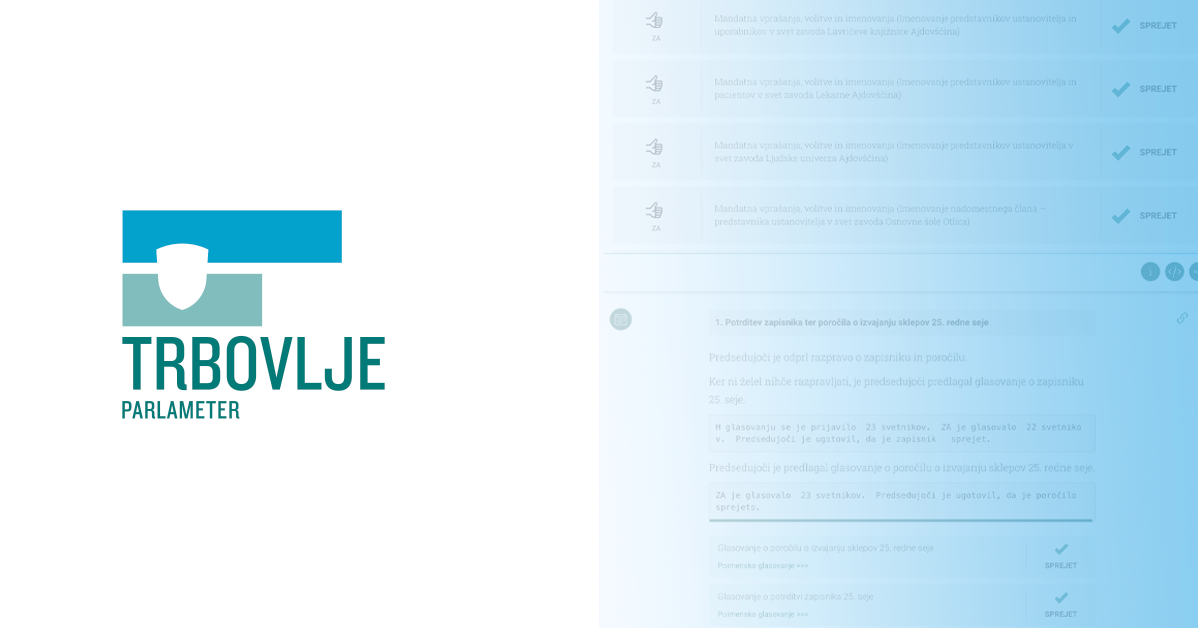
The installation of the local version of Parlameter in the Trbovlje municipality was carried out in cooperation with the municipality, which greatly facilitated the opening of their data. Parlameter Trbovlje helps monitor various aspects of the municipality's work by collecting, analysing, structuring and visualising data in a user-friendly way. Citizens now have easy access to information on the attendance of councillors at meetings, the number of questions asked and their voting behaviour. It is also possible to analyse the activities of the individual municipal clubs. All information is presented in the form of embeddable cards that can be easily published or shared on other websites.
29. November 2023
As part of the international project Regional Openness Index, coordinated by the regional network of non-governmental organisations, Action SEE, we analysed the transparency of the National Assembly of the Republic of Slovenia. The analysis compared four factors: Transparency, accessibility, integrity of MPs and efficiency of the National Assembly. Once again, the National Assembly proved to be the second most open in the region. While this is encouraging, there is still room for improvement. In the previous period (2020), the biggest problem was the integrity of MPs. This time, efficiency received the lowest rating.
1. November 2023
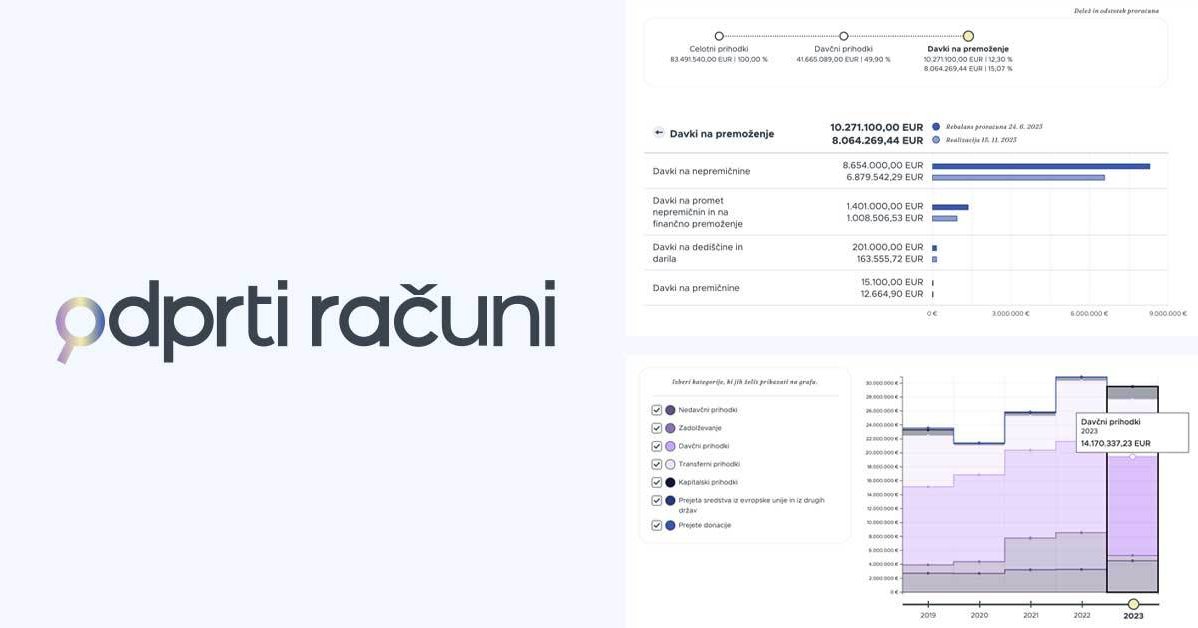
Open Books for Municipalities is a free application designed to enhance residents' trust in municipal operations through seamless proactive financial transparency. Simply input the data, and the application efficiently organizes and presents it in a user-friendly, easily understandable format. This empowers municipalities to significantly improve budget transparency without requiring programming expertise and with minimal time investment.
1. November 2023
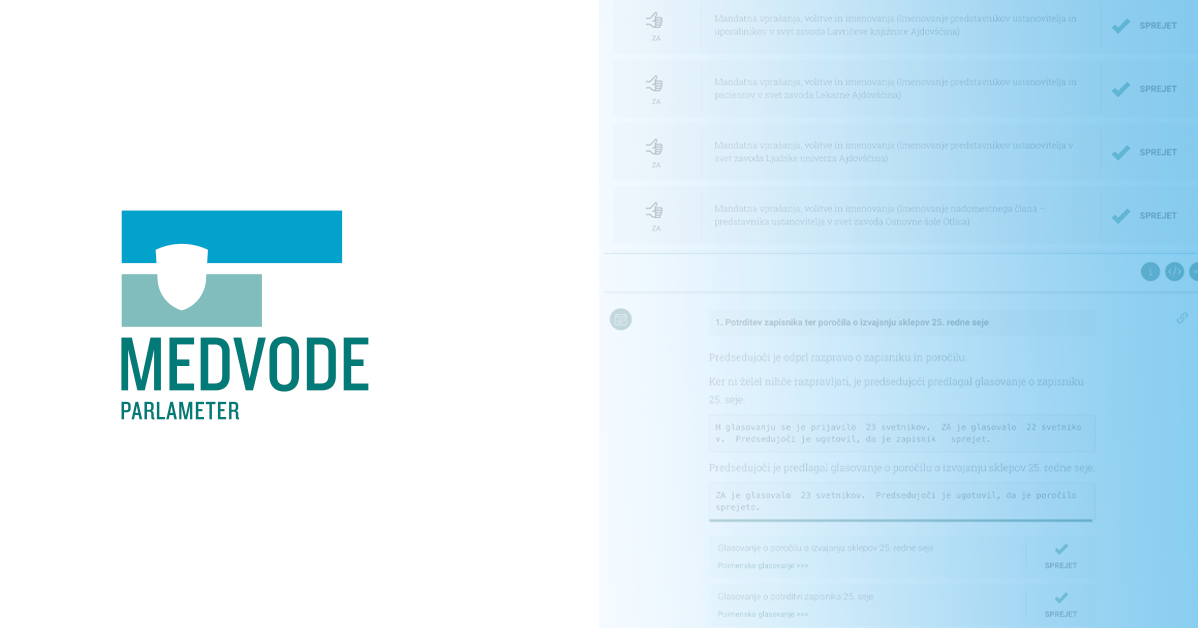
The installation of the local version of Parlameter in the Medvode municipality was carried out in cooperation with the municipality, which greatly facilitated the opening of their data. Parlameter Medvode helps monitor various aspects of the municipality's work by collecting, analysing, structuring and visualising data in a user-friendly way. Citizens now have easy access to information on the attendance of councillors at meetings, the number of questions asked and their voting behaviour. It is also possible to analyse the activities of the individual municipal clubs. All information is presented in the form of embeddable cards that can be easily published or shared on other websites.
14. June 2023
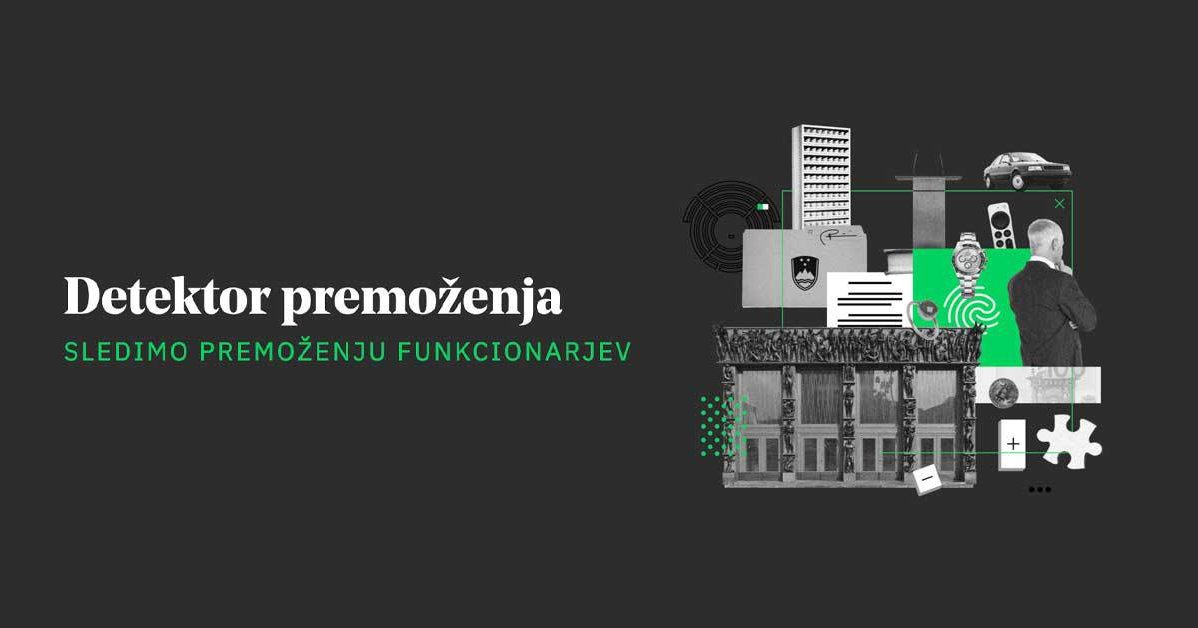
Asset detector is an online application we developed for Oštro as part of their research project. With the help of the application, the public can gain access to the assets of politicians, high-ranking officials and their families. Since the available data on the assets of Slovenian officials is unclear, the application relies on the methods of investigative and data journalism. The Oštro team first took on the assets of ministers.
4. May 2023
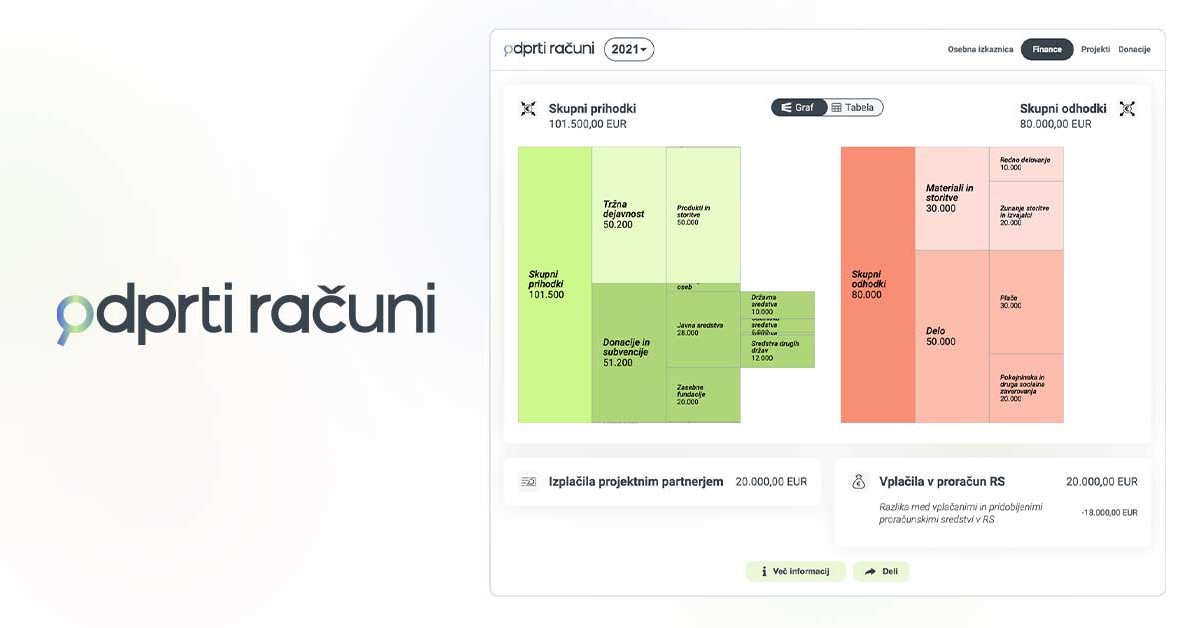
Open books is an open-source application designed for NGOs who strive for greater financial transparency. Using an intuitive and user-friendly interface, NGOs can enter their data and upload files, which the tool then organises and presents in a clear and concise manner. The application generates graphs and tables, calculates ratios (such as highest vs. lowest salary, or the amount of state funds received versus the amount paid in taxes), and lists details about current projects. Public trust is a crucial currency for NGOs, so it is worth making an effort to ensure it. We’ve done the effort as we developed this free tool, and now it is up to the NGOs to make use of it.